What Is AI Visibility Score and How to Improve It for Your Brand in 2026?
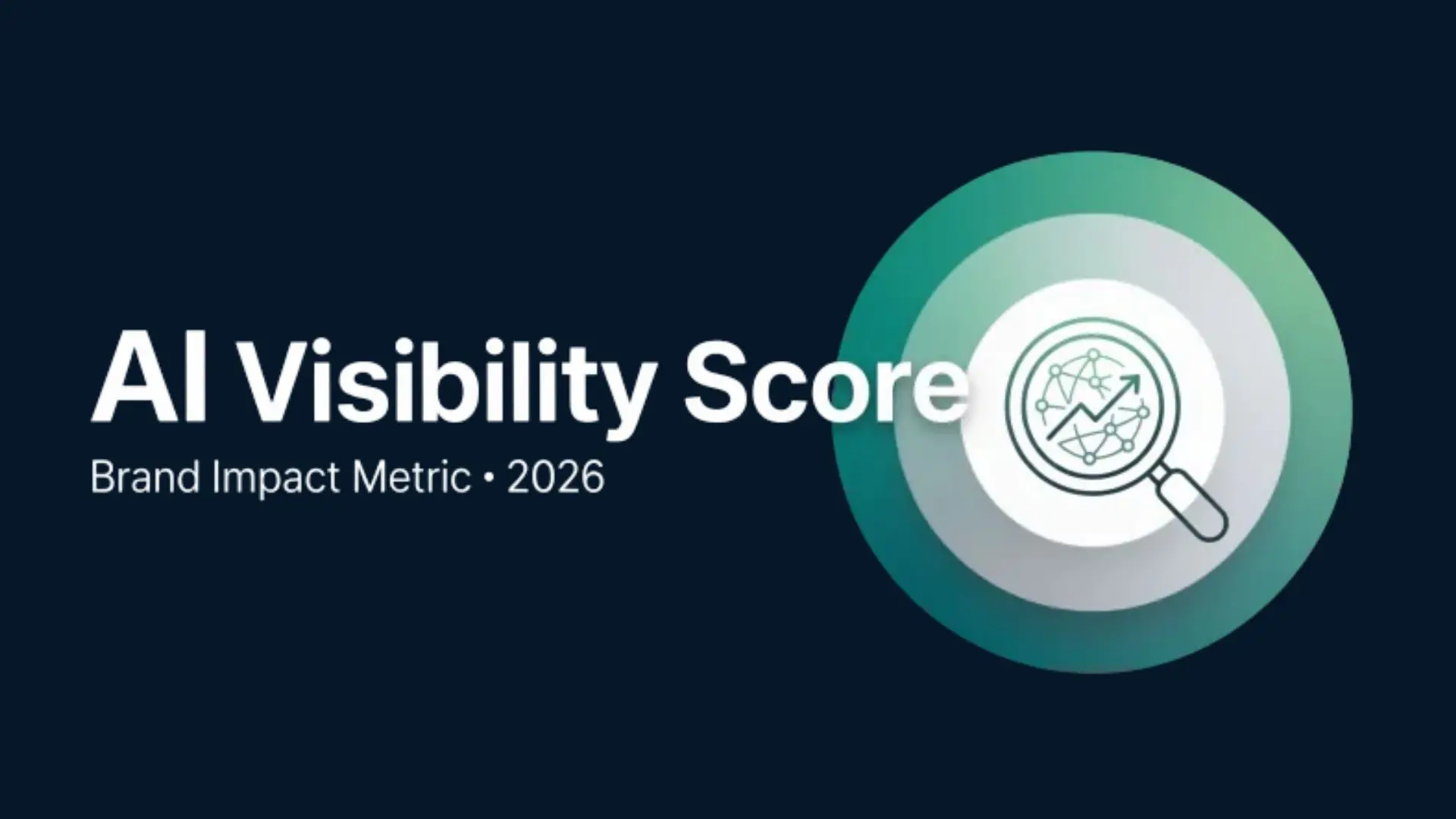
The AI Visibility Score is a 0-100 composite metric tracking how often and favorably your brand appears in AI-generated answers. AI referral traffic converts at 5-14x the rate of standard organic traffic. To dominate, brands must prioritize answer-first content, third-party authority, and cross-platform consistency. (Source: OptimizeGEO 2026)
Let’s face it: the search landscape has fundamentally changed.
ChatGPT now has 910 million weekly active users. Google AI Overviews reach 2 billion monthly users. Yet, most brands have no idea if AI engines are even mentioning them let alone how favorably, consistently, or compared to competitors.
Here’s the core risk: If your brand scores a zero in AI Visibility, you’re excluded from buyer shortlists before the sales cycle even begins. AI answers compress the consideration set to just 2–3 brands. A brand not cited in those answers doesn’t get evaluated; it gets ignored.
In this guide, I’ll show you exactly what the AI Visibility Score is, how it’s calculated, and the 6 proven strategies to improve it for your brand in 2026.
What Is AI Visibility Score?
The AI Visibility Score is a composite metric (0–100) that measures how often and how favorably your brand appears in AI-generated answers across platforms like ChatGPT, Gemini, and Perplexity. It tracks citation frequency, sentiment, share of voice, and cross-platform consistency.
From my experience auditing hundreds of brand presences, I’ve seen that brands with high scores today are building compounding citation authority. Brands with zero scores are building a massive catch-up problem for 2027. This is no longer a “nice-to-have” metric; it’s a leading business indicator.
How Is AI Visibility Score Calculated?
Direct Answer: It’s a weighted composite of 5 specific components. Knowing which component is dragging your score down tells you exactly what to fix.
- Citation Frequency (30%): How often your brand is mentioned across your tracked prompt set. (Formula: brand mentions ÷ total relevant AI responses × 100). A score below 15% indicates a structural content or authority problem. Above 35% in a competitive category is strong.
- Prompt Coverage (20%): Which buyer questions trigger your brand mention. Gaps here (e.g., ranking for “email deliverability tips” but not “how to improve email open rates”) are direct content creation opportunities.
- Entity Authority (20%): How strongly AI associates your brand with key topics. This is built through consistent messaging, third-party citations (G2, Reddit, LinkedIn), and Knowledge Graph optimization (Wikidata/Wikipedia). It’s the hardest to build, but the hardest to displace.
- Answer Prominence (15%): Where your brand appears in the AI answer. First mention = implicit recommendation. Buried footnote = listed for completeness. The commercial impact is vastly different.
- Cross-Platform Consistency (15%): Whether your brand appears consistently across ChatGPT, Gemini, Perplexity, and Google AI Overviews. Citation volumes can differ by up to 615x between platforms (Superlines, 2026). Multi-platform tracking is non-negotiable.
How to Improve Your AI Visibility Score: 6 Proven Strategies
Improving your score requires deliberate strategy across content, authority, and technical signals not just traditional SEO tactics.
1. Create Answer-First Content
Structure content with clear H2/H3 headings and 40–60 word answer blocks beneath each. AI systems pull individual passages, not entire pages. Every section should make sense without surrounding context. Pages with this structure are 2x more likely to earn AI citations.
2. Build Third-Party Authority
Here’s a stat that surprises most marketers: 85% of AI brand mentions come from third-party pages, not owned domains (AirOps). You need a strong, active presence on LinkedIn (now the #1 most-cited domain for professional queries on ChatGPT), G2, Trustpilot, and Reddit. Digital PR and genuine community engagement directly feed AI retrievability.
3. Refresh Content Regularly
Pages updated within the past 12 months are 2x more likely to earn AI citations. Brands producing 12+ content pieces monthly achieve up to 200x faster AI visibility gains. Set a quarterly refresh schedule: update statistics, add new examples, and expand FAQ sections. Ensure your dateModified timestamp in your Article schema is current.
4. Implement Advanced Schema Markup
Schema tells AI what your content is, who wrote it, and what questions it answers—making your site citable, not just crawlable. Triple-stacking FAQPage + Article + HowTo schema produces 1.8x more citations than Article schema alone.
5. Optimize for Sentiment
If your score shows high mention frequency but neutral or negative sentiment, the fix isn’t more content it’s better social proof. Publish original research with specific metrics that AI models can reference as authoritative data.
6. Track and Monitor Weekly
AI Visibility Score is not static. It shifts as AI models update and competitive dynamics evolve. Run your full prompt set weekly across ChatGPT, Perplexity, and Gemini. Track a “baseline → delta” loop. Without weekly tracking, you’re optimizing blind.
Frequently Asked Questions
What is a good AI Visibility Score for a brand?
What is a good AI Visibility Score for a brand?
A score below 20 indicates significant structural gaps. A score of 30-50 is competitive in most moderate-competition categories. Above 50 is strong. Category leaders rarely exceed 70 because AI systems naturally diversify citations. What matters most is your trend direction relative to your top 3–5 competitors.
How long does it take to improve AI visibility score?
Technical changes (schema deployment, llms.txt setup) show impact in 2-4 weeks. Content restructuring takes 4-8 weeks. Authority building (third-party mentions, editorial coverage) takes 2-4 months to compound into measurable improvement.
Does Google ranking affect my AI visibility score?
Yes, significantly for Google AI Overviews and Gemini (76.1% of citations come from top-10 organic results). However, for ChatGPT and Perplexity, the correlation is weaker. They weigh cross-web brand mentions and freshness heavily, creating opportunities for brands with strong community presence to earn citations regardless of traditional Google rankings.
Can a small brand achieve a high AI visibility score?
Absolutely. AI Visibility reflects content structure, entity presence, and freshness—all achievable at any scale. Smaller brands with comprehensive, well-structured niche content regularly outperform larger brands with weaker GEO foundations.
What is the fastest way to improve AI visibility score?
Technical fixes: unblocking AI crawlers in robots.txt, deploying FAQPage schema on high-traffic pages, and refreshing the dateModified timestamp on stale content. These can be implemented in days and show results within weeks.