Tools and APIs for Automating AI Search Visibility Tracking (2026 Guide)
AI search visibility tracking tools and APIs automate the monitoring of brand mentions, Share of Voice, and citations across ChatGPT, Perplexity, Google AI Overviews, and Gemini. By converting probabilistic AI responses into structured, time-series data via REST APIs and webhooks, engineering and marketing teams can measure Generative Engine Optimization (GEO) performance consistently.
Asking brand managers where their company stands inside generative search usually yields vague answers: “We appear occasionally in ChatGPT” or “We checked Perplexity last month.”
Manual checks are subjective, unscalable, and fail to generate structured metrics. A brand tracking 12 commercial prompts across four major AI platforms requires 48 manual checks daily before trend analysis even begins.
Automated AI search visibility tracking solves this structural gap. By programmatically probing generative engines, parsing unstructured responses, and normalizing metrics into structured JSON outputs, tools and APIs make Generative Engine Optimization (GEO) as systematically measurable as traditional web traffic.
Do not evaluate AI search tracking like traditional keyword rank tracking. Traditional search engines serve static SERPs for a query; generative engines output probabilistic answers that vary by context, prompt wording, and temporal retrieval indexes.
What Is AI Search Visibility Tracking and Who Is It For?
AI search visibility tracking is the automated process of measuring brand mentions, domain citations, sentiment, and Share of Voice across generative engines like ChatGPT, Perplexity, Google AI Overviews, and Gemini. It is designed for enterprise SEO leaders, growth marketers, and engineering teams needing structured time-series data to optimize brand presence inside AI-generated answers where traditional rank-tracking software fails.
When Automated AI Search Tracking Works (And When It Doesn’t)
Automated tracking provides high leverage for B2B SaaS, enterprise services, high-intent e-commerce, and brands managing competitive commercial search spaces.
When it does NOT apply:
- Hyper-local brick-and-mortar storefronts: Traditional Google Business Profile optimization and local SERP trackers remain more reliable for store-foot-traffic queries.
- Low-search-volume niche products: If buyers rarely query AI assistants about your product category, programmatic probing yields sparse, noisy datasets.
What Core GEO Metrics Should Your API Track?
An effective AI visibility tracking API must capture three core dimensions: Brand Mentions & Citations (presence rate and cited source URLs), AI Share of Voice (percentage of prompt-set responses including your brand), and Sentiment & Framing (qualitative perception of your brand in AI text). These dimensions produce machine-readable metrics like ai_share_of_voice, citation_rank, and competitor_presence.
| Metric | What It Measures | Target Dimension |
|---|---|---|
brand_mentions | Count of brand occurrences within the synthesized answer | Brand Mentions |
citation_sources | List of exact domain URLs cited as source references | Citations |
ai_share_of_voice | % of prompt-set queries returning brand inclusion | Share of Voice |
citation_rank | Ordinal position (1st, 2nd, 3rd) of the initial brand mention | Visibility |
competitor_presence | Competing brands featured in answers where you are missing | Share of Voice |
platform_coverage | Specific engines (ChatGPT, Perplexity, AIO, Gemini) citing you | Visibility |
sentiment_score | Qualitative framing score (Positive, Neutral, Negative) | Sentiment |
How Does Automated AI Search Tracking Work (5-Step Loop)?
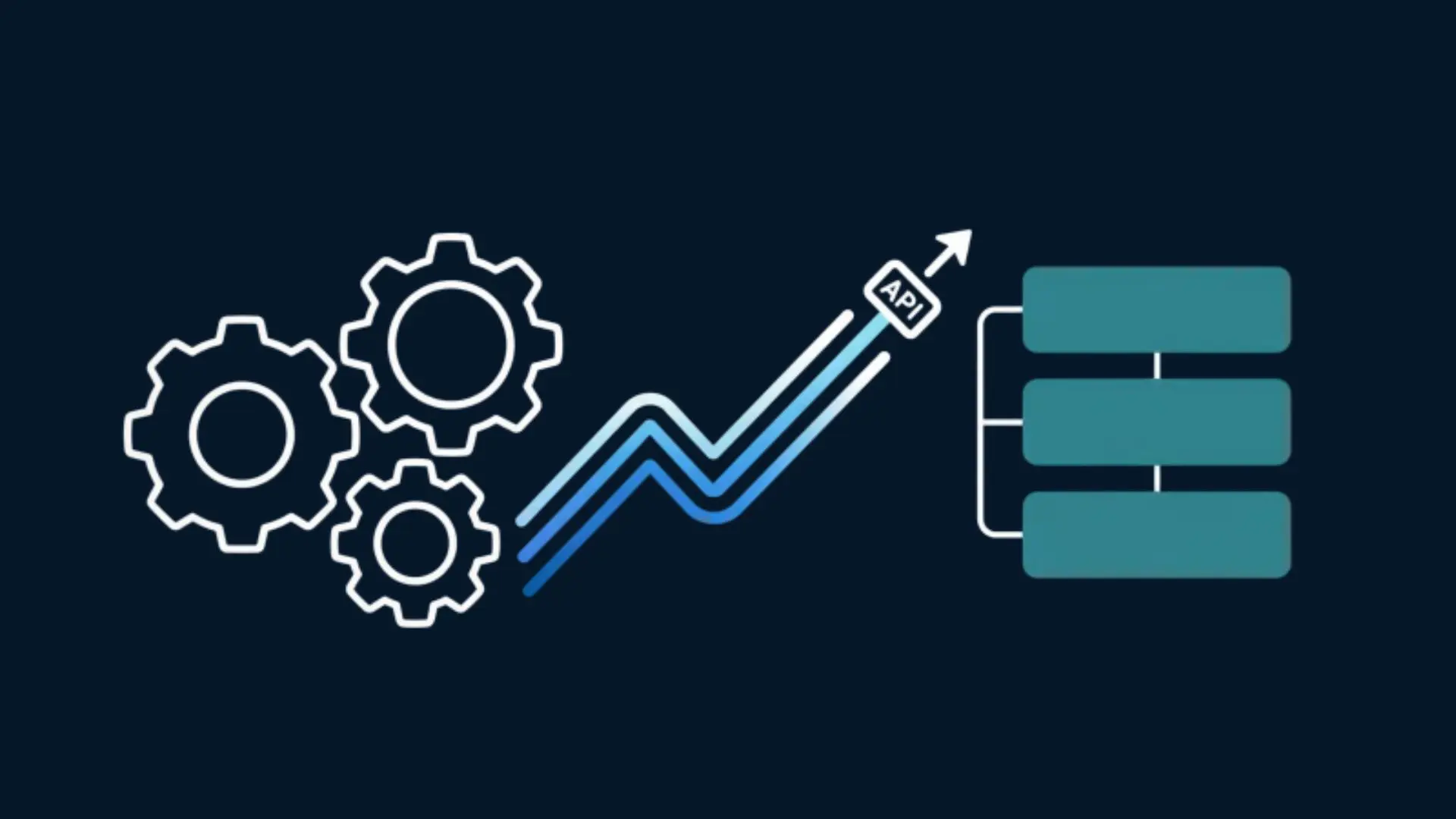
Automated tracking executes a five-step pipeline: prompt set selection, scheduled multi-platform API probing, unstructured response parsing, metric aggregation, and downstream data delivery. The platform queries engines programmatically, parses raw conversational text for entity mentions and markdown links, calculates Share of Voice, and exposes structured metrics via REST APIs, webhooks, or BI connectors.
Step 1: Curate Your GEO Prompt Set
Define commercial, informational, and category-level queries your ideal customers submit to AI search engines. For example: “What are the top enterprise tools for AI search visibility tracking?”
Step 2: Automated Multi-Platform Probing
The tracking engine dispatches queries on a daily or weekly cadence across OpenAI (GPT-4o), Perplexity AI, Google AI Overviews, and Google Gemini via programmatic pipelines handling rate limits and location parameters.
Step 3: Response Parsing & Extraction
Natural Language Processing (NLP) models parse the raw output text to extract:
- Mentioned brand names
- Hyperlinked citation URLs
- First-mention ordinal rank
- Contextual sentiment surrounding the brand
Step 4: Metric Aggregation & Benchmarking
Calculates aggregate values across timeframes, computing AI Share of Voice ($\text{SoV} = \frac{\text{Prompts with Brand Presence}}{\text{Total Prompts Probed}}$) and tracking historical trends against competitors.
Step 5: Downstream Integration
Delivers parsed metrics into data warehouses (Snowflake, BigQuery), reporting tools (Looker Studio, Tableau), or automated workflow engines (Zapier, Make).
AI engines change their output formatting frequently. A custom-built scraper will break regularly when response schemas change. Dedicated GEO platforms maintain resilient parser layers specifically to absorb these upstream fluctuations.
Which AI Engines Should You Track for Brand Visibility?
Comprehensive tracking requires monitoring four major platforms: ChatGPT (high-volume commercial and research queries), Perplexity AI (citation-dense, source-attribution engine), Google AI Overviews (high-impact SERP real estate), and Google Gemini (integrated workspace and broad consumer discovery). Each platform uses distinct retrieval architectures, causing brand visibility to vary significantly across platforms.
- ChatGPT (OpenAI): Dominates conversational search volume. Web-enabled models (GPT-4o) dynamically search and synthesize web sources, making web indexing vital.
- Perplexity AI: Built around explicit attribution. It returns numbered citations for nearly every claims block, making citation rate an immediate metric of technical authority.
- Google AI Overviews (AIO): Dominates high-intent web search queries. Securing citations here directly protects organic click-through rates.
- Google Gemini: Leverages Google’s Knowledge Graph and real-time indexing. Crucial for brands targeting enterprise Workspace users and Android ecosystems.
How Do Tool Categories Compare for AI Visibility Tracking?
Organizations choose between four primary tooling categories: Purpose-built GEO platforms (dedicated multi-engine tracking with native APIs like OptimizeGEO), Traditional SEO suites with AIO add-ons (focused primarily on Google SERPs), Custom API pipelines (built using LLM APIs), and Manual spreadsheets. Dedicated GEO tools offer the highest accuracy and multi-platform automation for enterprise workflows.
1. Dedicated GEO Platforms
Purpose-built software designed specifically for Generative Engine Optimization. They provide native multi-engine querying, automated sentiment scoring, competitor benchmarks, and structured REST APIs/webhooks.
2. Traditional SEO Suites with AI Modules
Established rank-tracking platforms expanding into Google AI Overview detection. While useful for teams already embedded in those suites, they often lack multi-platform coverage (e.g., tracking Perplexity or ChatGPT) and sentiment evaluation.
3. Custom API Integrations
Engineering teams query official APIs (OpenAI, Perplexity, Gemini) directly, writing custom regex/NLP scripts to parse brand mentions. This offers maximum customization but demands ongoing maintenance as LLM APIs and output formats evolve.
4. Manual Spreadsheets
Querying prompts manually in private browser windows and logging results in spreadsheets. While zero-cost, it does not scale, lacks statistical consistency, and fails to yield actionable time-series data.
Standard REST API Schema Example
Modern GEO tracking platforms return structured JSON outputs like the payload below:
{
  "query_prompt": "best tools for automating AI search visibility tracking",
  "brand": "generativeengine",
  "timestamp": "2026-03-16T09:00:00Z",
  "summary": {
    "ai_share_of_voice": 0.74,
    "avg_citation_rank": 1.3,
    "sentiment": "positive",
    "platforms_cited": 3
  },
  "by_platform": {
    "chatgpt":    { "cited": true,  "rank": 1, "sentiment": "positive" },
    "perplexity": { "cited": true,  "rank": 2, "sentiment": "neutral"  },
    "google_aio": { "cited": false, "rank": null, "sentiment": null },
    "gemini":     { "cited": true,  "rank": 1, "sentiment": "positive" }
  },
  "competitors_present": ["brand_a", "brand_b"]
}
How Do You Integrate AI Search Data Into Your Marketing Stack?
AI visibility data integrates into marketing stacks through three patterns: REST API connectors to sync metrics into BI dashboards (Looker Studio, Power BI), Webhooks to fire instant notifications into Slack when Share of Voice drops, and automation tools (Zapier, Make) to trigger content-refresh tasks in Jira or Asana.
- Executive BI Dashboards: Connect the tracking API to Looker Studio or Power BI to view AI Share of Voice alongside organic traffic and revenue metrics.
- Real-time Webhook Alerts: Configure webhooks to alert SEO or PR teams in Slack whenever sentiment turns negative or a key competitor overtakes primary prompt categories.
- Automated Content Workflows: Connect tracking drops via Zapier to automatically create content update tasks in Notion or Asana when citation loss is detected.
Frequently Asked Questions
What are the best tools and APIs for automating AI search visibility tracking?
The best solutions are purpose-built GEO platforms (such as OptimizeGEO) that programmatically query ChatGPT, Perplexity, Google AIO, and Gemini, returning structured JSON metrics via REST APIs and webhooks.
How does tracking AI search visibility differ from traditional SEO tracking?
Traditional SEO tracks static domain ranks and organic click volume on search results pages. AI search tracking measures dynamic brand mentions, domain source citations, sentiment framing, and Share of Voice within generative responses.
How often should brands audit their AI search visibility?
Core commercial prompts should be tracked daily to capture dynamic model updates and real-time web retrieval changes. Broader informational prompt sets should be audited weekly.
Does schema markup guarantee inclusion in Google AI Overviews?
No. Structured data (schema.org) clarifies page entities and context for search crawlers, increasing the likelihood of accurate parsing, but Google does not guarantee inclusion in AI Overviews based on schema alone.
Automating AI search tracking transitions Generative Engine Optimization from guesswork into a structured marketing discipline. By deploying dedicated APIs, enterprise teams can track Share of Voice, protect brand framing, and rapidly adapt content strategies across every major AI platform.