AI Visibility APIs: How Companies Monitor Generative Search Programmatically
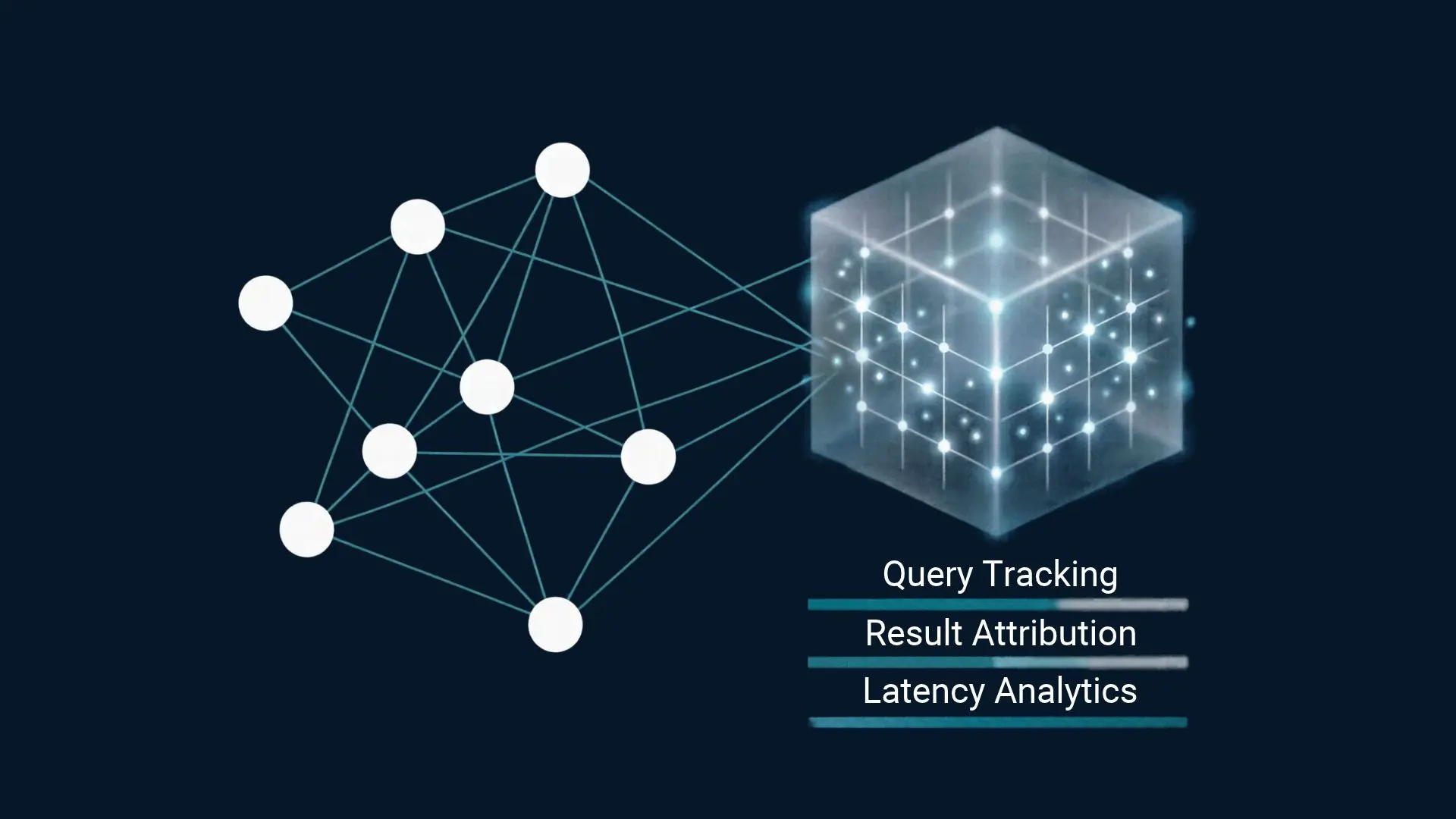
An AI visibility API is a programmatic interface that automates tracking brand presence across AI platforms like ChatGPT, Perplexity, Gemini, Claude, and Copilot. By executing prompt libraries at scale, these APIs measure Share of Model Voice, citation rates, and brand sentiment, transforming manual testing into continuous, actionable Generative Engine Optimization insights.
What Is an AI Visibility API?
An AI visibility API is a developer interface that allows companies to monitor how their brand, products, or services appear inside AI-generated answers.
Instead of typing questions one by one into chat interfaces, engineering and marketing teams use APIs to run prompt libraries automatically across multiple Large Language Models (LLMs) including ChatGPT, Perplexity, Gemini, Claude, and Copilot.
[PROMPT LIBRARY] ---> [AI VISIBILITY API] ---> [ChatGPT, Perplexity, Gemini, Claude]
                                                        |
[DASHBOARDS & ANALYTICS] <--- [Mentions, Citations, Sentiment] <---
The system parses raw AI outputs and returns structured data on:
- Brand Mentions: Whether your company is named in the response and where it sits in the hierarchy.
- Citations & Sources: Which web pages the model referenced to compile its answer.
- Brand Sentiment: Whether the AI frames your product as a recommended solution, a secondary alternative, or an unfavorable choice.
Why Do You Need an API for AI Search Monitoring?
Manual prompt testing fails as soon as you track more than a handful of queries. An AI visibility API automates prompt execution across multiple AI engines simultaneously, turning isolated checks into continuous analytics. It enables companies to quantify Share of Model Voice, track citation trends over time, and integrate generative search data directly into existing BI dashboards.
If you manage search strategy for a growing brand, your target audience isn’t just searching Google they are asking generative assistants questions like:
- “What are the top enterprise project management tools for remote teams?”
- “How do I track brand mentions in AI search?”
- “Which platforms offer real-time AI visibility monitoring?”
Testing these queries manually across five different AI platforms quickly becomes unsustainable.
+------------------------------------+------------------------------------+
| Manual Testing                     | API-Driven Monitoring              |
+------------------------------------+------------------------------------+
| Time-consuming & inconsistent      | Automated, scheduled execution     |
| mpossible to scale (10+ prompts    | cales to thousands of prompts      |
| No historical trend tracking       | Structured data over time          |
| Siloed from executive dashboards   | Direct BI & analytics ingestion    |
+------------------------------------+------------------------------------+
An API shifts your strategy from sporadic spot-checking to continuous surveillance. It ensures you catch sudden drops in AI visibility before they impact your pipeline.
Why Traditional Search Analytics Can’t Measure Generative AI
Traditional SEO platforms track rankings, impressions, clicks, and organic traffic.
Generative AI discovery operates on an entirely different layer of influence:
- Zero-Click Decisions: A user asks Perplexity for vendor recommendations. Perplexity generates a bulleted summary comparing three companies. The user reads the summary and makes a decision without clicking a single outbound link.
- Pre-Funnel Positioning: AI assistants shape user perception before a branded search ever happens on Google.
- Dynamic Synthesis: Unlike static Google SERPs, AI responses synthesize multiple web sources on the fly based on specific user prompts.
Because generative answers synthesize information directly, traditional analytics tools register zero traffic even when an AI model strongly recommends your brand. Monitoring model outputs directly via API is the only reliable way to track this reach.
Key Capabilities of an AI Visibility API
[PROMPT EXECUTION] ---> [BRAND MENTION DETECTION] ---> [CITATION TRACKING] ---> [SENTIMENT ANALYSIS]
A enterprise-grade AI search monitoring API delivers four primary technical capabilities:
1. Multi-Model Prompt Execution
The API accepts a list of prompts and executes them simultaneously across diverse AI architectures:
- OpenAI (ChatGPT): Direct answer engine and web-browsing modes.
- Perplexity: Search-focused answer engine relying on real-time web retrieval.
- Google Gemini: Integration with Google’s search index and knowledge graphs.
- Anthropic Claude: Complex synthesis and long-context analysis.
- Microsoft Copilot: Web-grounded enterprise AI responses.
2. Brand Mention & Position Detection
The engine scans returned text to verify:
- Is your brand present in the response?
- Is it ranked #1 in a recommended list or buried in a footnote?
- Which competitors are mentioned alongside your brand?
3. Citation & Source Tracking
Generative search engines cite external sources to justify their answers. The API tracks:
- Exactly which URLs are cited as authoritative sources.
- How frequently your domain appears in citations compared to competitor domains.
- Source decay when an AI model stops citing a key piece of your content.
4. Sentiment & Recommendation Parsing
AI models describe products using nuanced language. Automated sentiment parsing categorizes model outputs into clear classifications:
- Recommended: “X is the industry standard for high-volume data teams.”
- Neutral/Comparative: “X is a alternative to Y with similar feature sets.”
- Negative/Cautionary: “X is popular, though users report steep learning curves.”
4-Step Workflow: How to Implement Continuous AI Monitoring
To implement automated AI monitoring, first curate a library of high-intent industry queries. Second, configure your API pipeline to execute these prompts across target AI platforms on a scheduled cadence. Third, parse the outputs for brand mentions, citations, and sentiment. Finally, compute core metrics like Share of Model Voice and feed them into your central reporting tools.
Step 1: Build Your Core Prompt Library
Define 50 to 500 prompts that mirror real buyer research workflows. Group them by category:
- Category Queries: “Best Generative Engine Optimization platforms”
- Comparative Queries: “Brand X vs Brand Y for enterprise security”
- Problem/Solution Queries: “How to measure AI search performance programmatically”
Step 2: Execute Prompts Across Target Engines
Schedule the API to run your prompt library at set intervals (e.g., daily or weekly). Running queries on a schedule accounts for model drift and continuous web indexing.
Step 3: Extract and Parse Response Data
Extract key datapoints from each JSON response payload:
{
  "prompt": "best AI search visibility tools",
  "platform": "perplexity",
  "brand_mentioned": true,
  "brand_position": 1,
  "sentiment": "highly_recommended",
  "citations": [
    "https://yourdomain.com/blog/ai-visibility-guide",
    "https://techcrunch.com/review-ai-tools"
  ]
}
Step 4: Aggregate into Executive Metrics
Convert raw API responses into business KPIs to measure your progress over time.
Key Metrics to Track via API
| Metric | How It Is Calculated | Why It Matters |
|---|---|---|
| Share of Model Voice (SoMV) | $\frac{\text{Prompts mentioning your brand}}{\text{Total category prompts executed}} \times 100$ | Measures overall market dominance inside generative search answers. |
| Citation Frequency Rate | $\frac{\text{Responses citing your domain}}{\text{Total responses with external sources}} \times 100$ | Identifies whether AI models view your content as a primary source of truth. |
| Prompt-Level Visibility | Mentions per specific user query | Uncovers content gaps where competitors appear but your brand is missing. |
| Recommendation Score | Ratio of positive vs neutral/negative brand descriptions | Ensures AI assistants position your brand accurately to potential buyers. |
Who Needs an AI Visibility API?
- Growth & SEO Teams: Transitioning from traditional SEO to Generative Engine Optimization (GEO). They use API data to optimize content for AI citations.
- Data & Analytics Engineers: Ingesting AI visibility data into Snowflake, BigQuery, or Looker to combine brand search data with pipeline revenue.
- Agencies: Tracking baseline AI presence and demonstrating GEO growth across large client portfolios.
- Enterprise Marketing Leaders: Safeguarding brand reputation across autonomous search ecosystems.
Frequently Asked Questions
What is an AI visibility API?
An AI visibility API is a programmatic service that runs prompts across AI platforms (ChatGPT, Perplexity, Gemini, Claude) to automatically collect, measure, and analyze brand mentions, citations, and sentiment.
How does an AI visibility API differ from traditional SEO APIs?
SEO APIs track Google rankings, SERP features, and backlinks. AI visibility APIs analyze generative, non-deterministic text outputs from LLMs to evaluate how brand entities are described inside synthesized answers.
What is Share of Model Voice?
Share of Model Voice (SoMV) is the percentage of generative responses in a given category prompt set that explicitly mention or recommend your brand compared to competitors.
Can an API help improve my AI search rankings?
The API itself is a measurement tool. However, by identifying which of your web pages are cited by AI models and where your brand is missing you can optimize your site’s structure, E-E-A-T, and authoritative content to improve visibility.
Final Thoughts: Moving from Unseen to Unmissable in AI Search
Generative AI is shifting how buyers research solutions. Relying solely on traditional web analytics leaves companies blind to a rapidly growing discovery channel.
By building a continuous monitoring layer with an AI visibility API, marketing and data teams gain the clarity needed to track Share of Model Voice, protect brand sentiment, and win the future of search.